My Artistic Voice
Step into my wacky world of art and design! I’ve got opinions, experience, and plenty of stories to share: from battling creative blocks to the importance of hand drawing, from AI art trends to gear I can’t live without. So, put those reading glasses on, pour yourself a drink, and enjoy.
Posted - 06/26/2026
Colour My World
Orange, the colour of warmth, that's the colour I associate with myself. I like to think I'm approachable, friendly, and glowing with warmth.
Now what colour are you?
Generally speaking, blue is cool, red is hot, green is earthy, purple is spiritual, and orange is warm. I won't list every colour association here, feel free to look them up.
As an artist, knowing how to use colour is essential. Colour is your friend or, for some artists, their worst enemy. Drawing in colour has several advantages. It helps clarify objects, strengthens emotional impact, and can even help tell your story.
I don't want to put down artists who work primarily in grayscale or black and white. They also create outstanding pieces and, in some cases, working without colour can be even more challenging.
There are many approaches to colouring. Some artists simply replicate the colours they believe objects and characters should have. Others rely on colour theory, using methods such as primary colours, complementary colours, or analogous colour schemes.
The key to colour is experimentation. As I mentioned in other posts, I'm not very good with markers. The reason isn't that I lack the skill, I simply enjoy experimenting with colours. Traditional media doesn't always allow for that kind of trial and error. Digital art, on the other hand, has something wonderful: the Undo button. Catch my drift?
Colour is a lot like drawing by feel (see Drawing by Feel). There comes a point where you have to trust your instincts and live in the moment. Sometimes you'll make a mistake. Sometimes you'll discover the perfect colour combination.
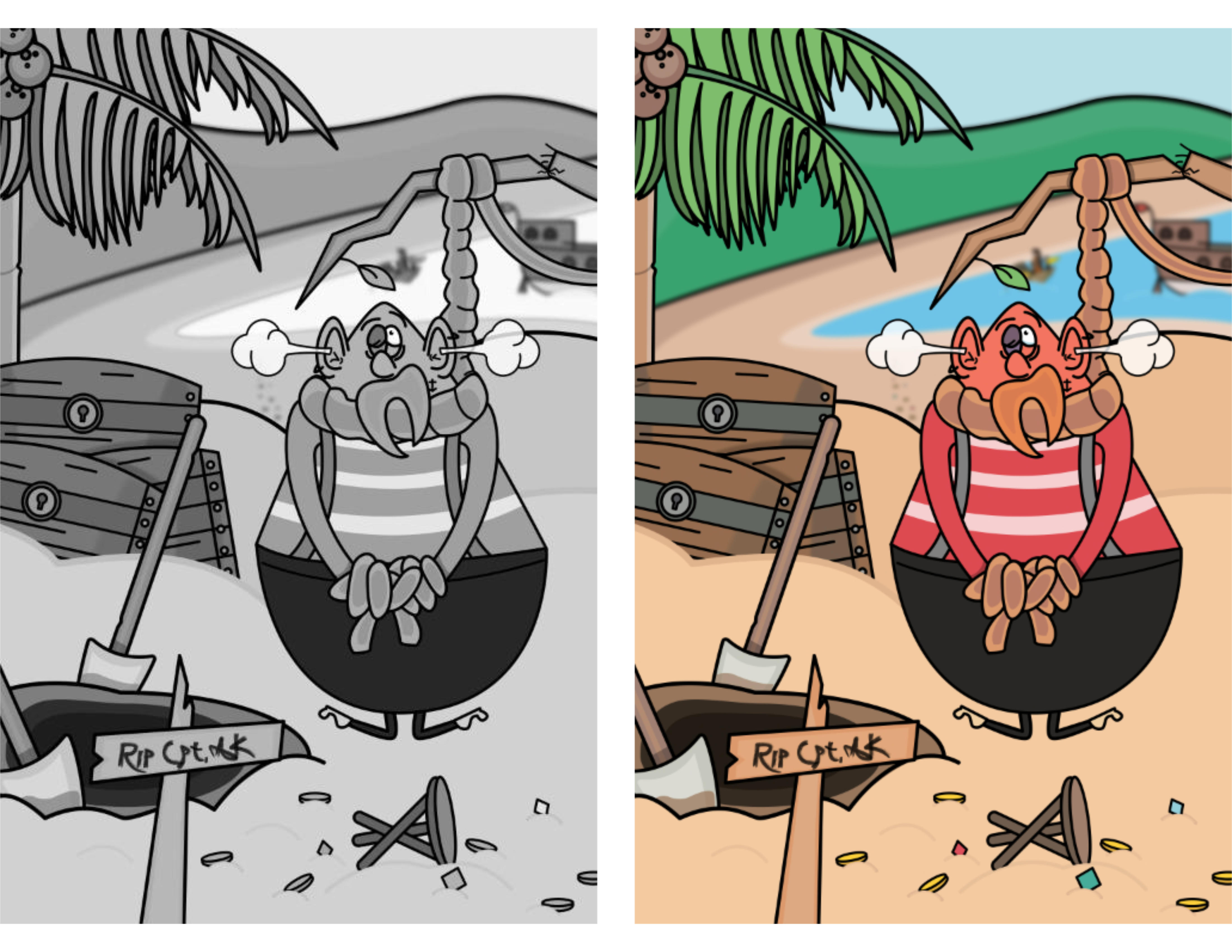
For practice, make several photocopies of one of your line drawings. Then colour each copy using markers, coloured pencils, watercolours, or digital tools. Don't worry if one version doesn't turn out the way you hoped, you have several more chances to experiment.
A well-coloured illustration can sell an image even if the drawing isn't technically perfect. So keep experimenting, and just as I've discovered that orange represents me, discover the colours that best represent your characters.
Posted - 06/26/2026
Drawing by Feel
In many forms of art, you’ll hear people say, “Feel the music,” “Feel the pencil,” or “Feel the energy.” But what exactly are they talking about?
They’re talking about your first, unfiltered reaction.
Imagine you’re out for dinner and your date walks through the door. Before you’ve had time to think, your heart beats a little faster, your palms begin to sweat, and your emotions take over. That reaction is raw and genuine. Artists often try to capture that same kind of honesty in their work.
So how do you learn to draw by feel?
For some people, it comes naturally. Have you ever watched someone on a dance floor who seems completely absorbed in the music? They aren’t thinking about every movement. They’re simply responding to what they hear.
Drawing can be the same way.
I remember my first figure drawing class. We were introduced to gesture drawing, and honestly, my drawings were terrible. They looked stiff and over-calculated. I was thinking too much and feeling too little.
After several classes, something changed. I stopped worrying about making perfect lines and began responding to the movement of the pose instead. I started feeling the shapes, the texture of the pencil on the paper, and the energy of the subject. My drawings became much more fluid.
So what if drawing by feel doesn’t come naturally?
Relax.
Everyone finds their own way. I like to put on some music and have a cup of coffee. Other people prefer complete silence. Some enjoy a glass of wine or beer. “Whatever” helps you settle into a creative mindset. Personally I would stay away from drugs but it’s your choice. The important thing is finding a way to quiet your inner critic.
Not every form of art benefits equally from this approach. Technical illustration, architecture, and engineering often demand precision above all else. But cartooning is different. Energy, emotion, and personality are often more important than perfect accuracy.
It’s a little like an improvised guitar solo. When the musician is truly feeling the music, the audience feels it too. The same thing can happen with a drawing. If your lines have confidence, movement, and emotion, people often respond to them, even if they aren’t technically perfect.
So don’t get discouraged if you don’t immediately feel connected to your art. It often comes with experience, confidence, and learning to relax. Slow down, enjoy the process, and let the drawing flow naturally.
When that happens, your creative potential can surprise you.
Posted - 06/25/2026
Thoughts On Life
In one of my first-year art classes, the teacher asked us to write down what art meant to us. I wrote: "Art is an expression of oneself. Therefore, my goal is to show the world who I am." I think this statement is the purest reflection of what art means to me. I create art to express myself, not for money, not for fame, but as an outlet.
Would it be great if others appreciated my art? Absolutely. But history is full of artists who received little recognition during their lifetimes. You don't have to be famous to be great.
As a matter of fact, this is a core concept in both cartooning and life. You don't have to be "noticed" or be the most popular person in the room. It's more important to stay true to your beliefs and values.
I know that isn't always easy. We live in a very competitive society, especially in the West. But as an artist, you should create in a way that feels natural to you, a way that you genuinely enjoy. That doesn't mean you can't experiment with different genres or actively pursue a particular style. It simply means understanding what kind of artist you are. Are you a children's illustrator, a digital artist, a fantasy artist, or something else entirely?
I know who I am: a cartoonist who likes to make people laugh. I'm good at character design, illustrating concepts, telling stories, and creating vector artwork. I'm not particularly good at realism, highly detailed illustrations, or using markers. As I discussed in Just Go With It, I ride the wave. I encourage you to do the same.
I remember going to an art show where one artist had created incredibly photorealistic illustrations. Technically, they were nearly perfect, but they didn't spark my imagination. The subjects were ordinary; they looked like photographs of strangers. Why would I spend a lot of money on that when I could simply take a photograph of a family member or friend and print it myself?
Now, if someone drew a carrot cowboy, a puffer fish playing a trumpet, or two characters travelling the world together, I'd be intrigued, even if they were nothing more than stick figures. To me, creativity outweighs technical expertise.
Here's the important part: everyone should still strive to improve technically. I'm not saying that if you specialize in stick figures, you need to become the next Robert Crumb. Instead, maybe refine your drawing just enough that it communicates more clearly without relying on captions. Technique affects communication. Sometimes a few simple lines say more than hundreds of detailed ones. Other times, extra detail helps tell the story. The key is knowing what your drawing needs.
One thing to remember is that art takes time. Don't fall into the trap of thinking you'll pick up a pencil and suddenly become a master. Most people struggle with drawing and with turning ideas into images, but that's part of the fun. It's through those struggles that we develop technique, creativity, and effective storytelling.
The truth is, you'll eventually find your own path. When that happens, I can't say. But if art is something you're passionate about, you've already found the path. The rest is simply discovering what kind of artist you are.
After ten years of cartooning, I know what kind of cartoonist I am and what kind of cartoonist I aspire to be. Just as I discovered myself through art, I believe you can discover yourself, your art, and your own voice.
Posted - 06/25/2026
Character Design: The Hardest Part
When I close my eyes and visualize an illustration, the first thing that comes to mind is the character (or characters) I am going to create. I am a character-driven illustrator. To me, a good character tells the story. It's like playing guitar: the chords (the cartoon's environment) set the atmosphere, while the melody (the main character) takes the audience on the journey.
This puts a lot of pressure on us as artists. We must create characters that are visually unique, self-explanatory, and often cute. I strongly believe that character creation is the hardest part of cartooning. Without memorable characters, your cartoon risks being forgotten.
Some great cartoon characters I can recall include Bugs Bunny, Yosemite Sam, the Road Runner, and Woody Woodpecker. You can probably tell I love Gold Key Comics. The truth is, these characters are memorable for many reasons, and I am certain a great deal of thought went into designing each one. One important decision you need to make is how detailed you want your character to be.
The simpler a character becomes, the harder it can be to express certain emotions. For example, if you choose to give your character no eyebrows for the sake of simplicity, it becomes much harder to show emotions such as anger, where downward-facing eyebrows play an important role.
As I mentioned earlier, cuteness goes a long way. Many factors affect how cute a character appears, but the first two that come to mind are the eyes and scale. Generally, cute characters have big, puppy-like eyes. They also tend to be smaller than the other characters around them. You can see this formula everywhere, just watch almost any children's cartoon.
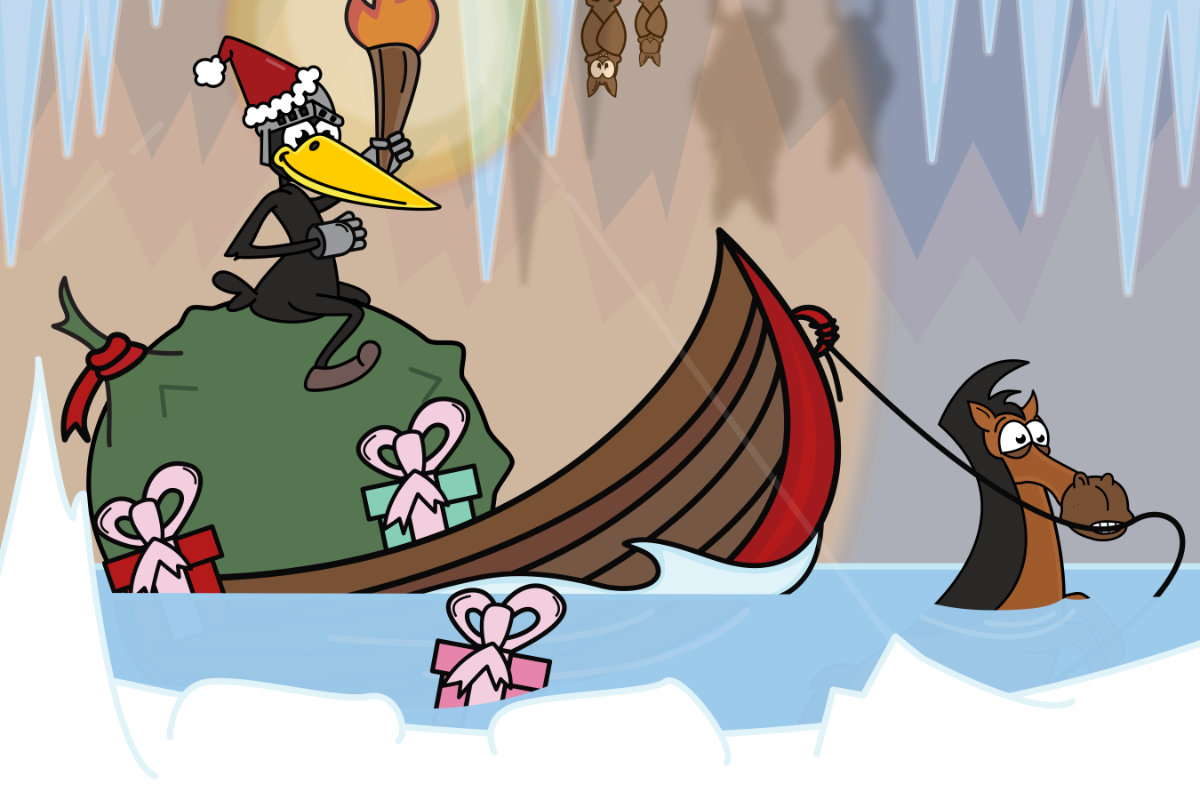
Above middle (Bats): Cute innocent spectators who are wondering what on earth is happening.
Above right (Ace): Loyal helper, a little nervous, along for the ride.
If you're the opposite, relax. Have a cup of tea (or any beverage you find relaxing) and study some cartoon characters you enjoy. Reimagine them. Ask yourself which features give those characters their oomph. Then pick up your pencil and start drawing.
Posted - 06/25/2026
There Are Others Out There
I'll say this right away: your art will never be 100% original. In my opinion, almost everything has been done before. Originality in art doesn't come from reinventing the wheel but from making your own modifications to it. In the article: A Note on Plagiarism, I talk about not trying to copy an illustration exactly. Your goal as a cartoonist should not be to become a photocopier. It's about expressing you and being an effective communicator.
My advice? Make mistakes. Change colours. Reinvent characters. Tell a story about what's on your mind and what you're feeling.
I understand that drawing is also a technical skill. You have to practise to become good at using a pencil, fine-liner, or computer program. But if you have ideas, you have nothing to worry about. There are great artists who use simple images to communicate effectively. Take South Park, for example. The cartooning style is intentionally simple and flat. Technically, it isn't impressive in terms of realism, yet it makes people laugh again and again. More importantly, it communicates its ideas extremely well.
So don't feel discouraged if your drawings look childish. Your skills will develop over time and, if they don't, learn how to use that style to your advantage. I always say, "If you can't draw something, change the angle." That isn't always possible, but looking at a subject from a different perspective often gives you a new way to solve the problem.
Here's an example. Let's say you're drawing silhouette cartoons. Without much detail, a person pushing a lawn mower might look like they're pushing a stroller. So how do you fix the communication problem? Simple: add a caption.
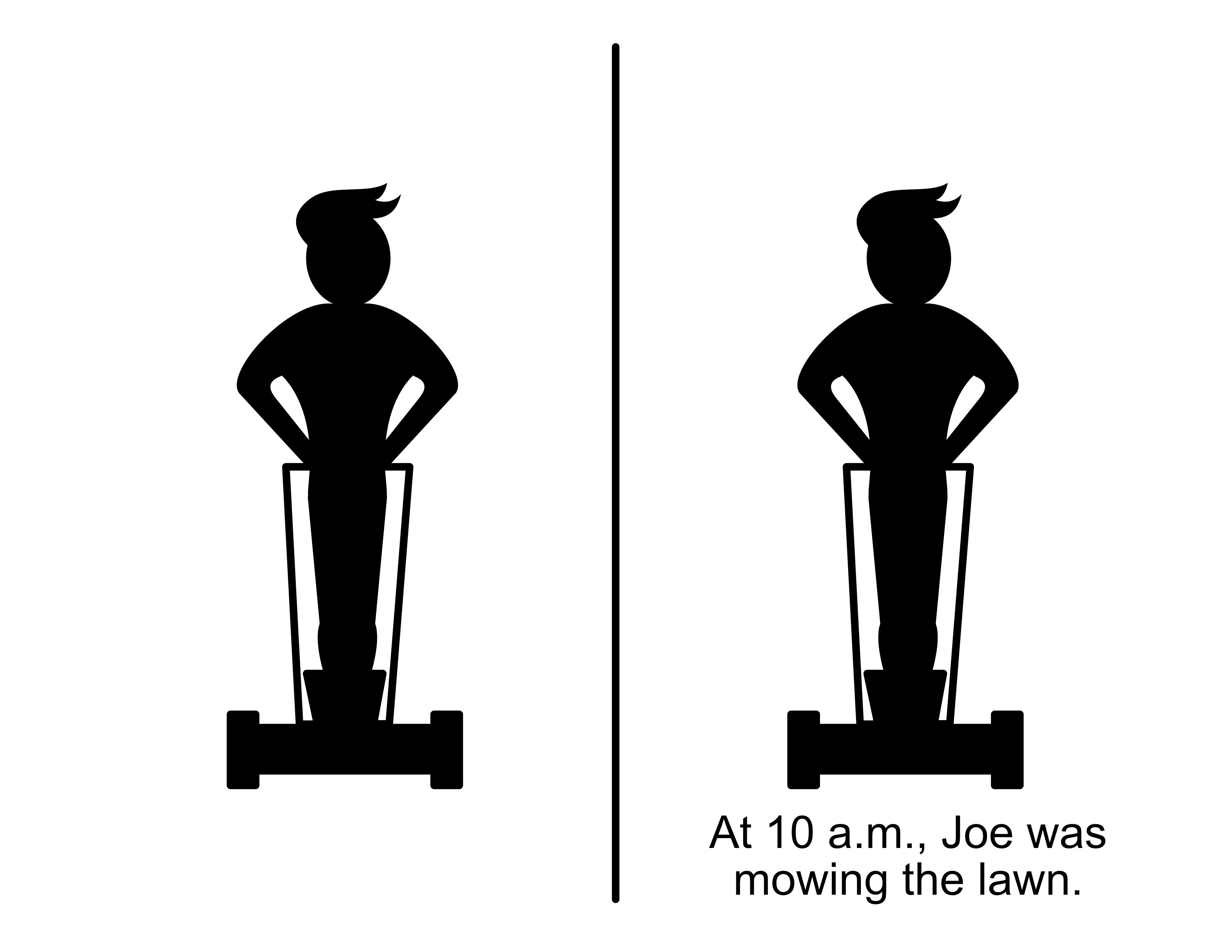
Above right: A clear message.
As an artist, you must learn to use every tool available to you. That's how you become more creative. There may be millions of images of someone pushing a lawn mower, but far fewer of a silhouette figure telling the same story with a well-written caption. And there are none with your exact ideas, your exact humour, and your exact way of communicating.
Posted - 06/25/2026
I’m Not Perfect
All artists make mistakes. Whether you draw an ear too large or a piece of hair too thick, your art will never be perfect. The funny thing is, your audience will often never notice. They may assume you did it on purpose. They might think it’s a form of artistic expression or some hidden message.
I have an example in mind, although it’s a little controversial: the Mona Lisa. One of the most famous paintings in history isn’t perfect. I’ve even heard people claim that the figure isn’t a woman at all, but a man. Honestly, I have no idea if that’s true. What I do know is that she isn’t, in my opinion, the most beautiful woman ever painted. That’s not meant as an insult to Leonardo da Vinci. He was an extraordinary artist. But what do I know? I’m not a fine artist, and I’m certainly not an art critic. The point I’m trying to make is that every piece of art has its faults, even the greats. Even a painting that took nearly sixteen years to complete.
Back to this idea of perfection.
I don’t want you to get the impression that I shit gold. I’m still a growing artist. I regularly go back and update old blog posts, correcting mistakes and improving ideas. My website is constantly being revised because I’m constantly learning.
My philosophy can best be described as two steps forward, one step back. Sometimes you do something only to realize later that it wasn’t the best decision. Then you fix it, and your work becomes stronger because of it. Those are the kinds of mistakes that teach you the most.
So don’t think for a second that I believe I’m the greatest artist of all time. I don’t.
We’re all students, and hopefully we never stop learning.
Posted - 06/24/2026
The Emotional Side of Art
When I look at an illustration, painting, photograph, statue, building, stuffed toy, or almost any other creative work, the first thing I pay attention to is: How does it make me feel?
Everything you see affects your emotions in some way. For example, I'm sitting in my art studio right now. The lights have a warm orange tint, which makes me feel relaxed and helps me focus on writing this blog post. When I'm relaxed, I tend to be more creative and ideas seem to flow more easily.
So how does this relate to observing art?
The point I'm trying to make is that our first reaction to a piece of art is usually an emotional one. Does it make us smile? Does it scare us? Does it feel threatening? Does it confuse us? The list goes on. Whatever the reaction may be, it's worth paying attention to when you're trying to understand a work of art.
Something many people overlook is how much the environment influences that emotional response. Religious artwork, for example, doesn't have the same impact on the wall of a family restaurant as it does inside a place of worship.
Churches, temples, and other sacred spaces are often designed to make religious imagery feel powerful and moving. The architecture, candles, stained glass, and decorations all contribute to the experience.
As an artist, this means that if you're going to exhibit your work, the location matters. It's something many artists overlook. Even the frame surrounding a piece can influence how viewers respond to it.
This may sound funny, but even the price can affect a viewer's emotions. If you charge more for a piece of art, some people will assume it's somehow "better" than a cheaper alternative. In some cases, artists can actually sell more by charging more. That really cracks me up, but I swear it's true. If something is too cheap, people sometimes assume there's something wrong with it.
So, back to the beginning: I judge art based largely on emotion. A beautifully rendered painting may demonstrate incredible technical skill, but if it doesn't make me feel anything, I probably won't be interested in buying it.
Children are especially influenced by emotion. Just look at the popularity of characters like Mario, SpongeBob, and Elmo. These characters are designed to be appealing, memorable, and fun. People connect with them emotionally.
Posted - 06/24/2026
Going Slow
In Graphic Design School, everything is fast-paced. Professors want you to pump out project after project. I have to admit, working quickly is a useful skill, especially if you want to get into the graphic design industry.
But if you're a leisure cartoonist, don't worry too much about time. When I'm creating a digital illustration (see Arrow & Ace), I know that from concept to finished piece will take approximately 12–15 hours. In fact, I think it's a good idea to slow yourself down, especially if you're creating art to relax.
As I mentioned in India Ink – Love/Hate, slowing down may be exactly what you need. India ink is a little too slow for me, but we all have our preferences.
I was once talking to a professor, and we were discussing how art is similar to meditation. It doesn't make your mind go blank, but it can calm you down and help you become hyper-focused. Time ceases to exist. This isn't to say there aren't challenges, but in general, I find drawing to be a very enjoyable experience. That's one of the reasons I do it.
If speed is important to you, there are exercises that can help. One of my drawing professors had us draw 150 cubes in three hours. In another session, we drew 150 basic shapes. Another great way to improve is through gesture drawing. I used to take life drawing courses specifically to become more accurate and draw faster, and it worked.
So if you can, go slow and enjoy yourself. Most likely, your work will reflect it through smoother lines and more thoughtful ideas. But don’t forget: there comes a time when you have to say, Enough is Enough.
Remember, the turtle beat the hare.
Posted - 06/23/2026
A Bad Artist?
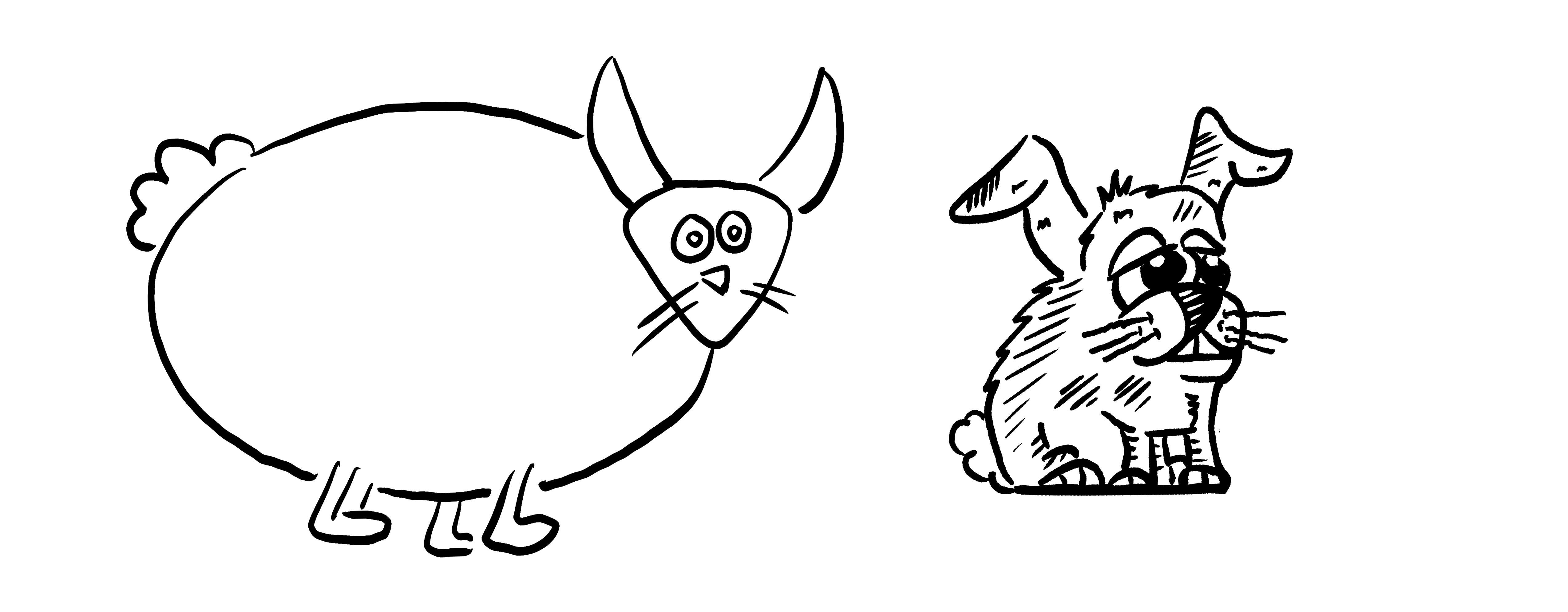
Above right: Cartoon bunny.
I’m guessing you’ll say the one on the right. Or, if you’re a smart @ss, you’ll say neither is good.
I disagree. They’re both good. They simply serve different purposes.
The rabbit on the left is almost a pictograph. It’s easy to recognize because it contains the essential features of a rabbit: long ears, whiskers, and a fluffy tail. It communicates the idea of a rabbit using as few lines as possible.
The inspiration actually came from my four-year-old nephew. He drew a rabbit very similar to this in his art class. The moment he showed it to me, I knew exactly what he had drawn. If you found a similar image painted on the wall of a cave, you’d probably say, “They were drawing rabbits.” It communicates its message clearly.
Now look at the rabbit on the right.
It’s also immediately recognizable as a rabbit, but it does something different. It has personality. It looks cute, expressive, and full of life. It feels like a character that could star in a cartoon or be the innocent friend of the other animals in the forest.
So which rabbit should you use?
If you were designing a simple sign, the rabbit on the left might be the better choice. Imagine a “No Rabbits Allowed” sign. Simple, clear, and easy to recognize.
The rabbit on the right, however, belongs in a story. It invites the viewer to wonder who it is and what kind of adventures it might have.
Neither drawing is bad. They simply communicate in different ways.
That’s why I don’t believe there’s such a thing as bad art. There is only art that succeeds or fails at communicating what it is trying to say. A simple drawing can be just as successful as a detailed one if it fulfills its purpose.
Posted - 06/23/2026
The Third Kind
People often say there are two kinds of artists: those who think they're the best and those who think they "suck". As a cartoonist, I think you need to be a third kind of person, somewhere in the middle.
You should believe in your work enough to share it with others, while also recognizing that there's always room to improve.
For a long time, I was in the "I suck" camp. I was nervous about showing anyone my drawings. But the more I practised, the more courses I took, and the more feedback I received, the more confident I became.
That confidence didn't appear overnight. As I've mentioned before, I've been cartooning for around ten years, and it took me nearly six years before I felt comfortable sharing my work publicly.
So what changed?
Honestly, I'm not entirely sure. I slowly began showing my cartoons to family and friends. Most of the feedback was positive, some of it was critical, but all of it helped me grow. Eventually, sharing my work stopped feeling frightening and started becoming enjoyable. That's one of the reasons I created this website.
My biggest piece of advice is simple: be patient. Confidence usually comes from experience, not from wishing you had it.
If you want to speed up the process, take small risks. Show your work to a friend. Post a drawing online. Display a piece at a local art show. I'm a big believer in baby steps, but every now and then, you have to take the plunge. You'll probably discover that the hardest part wasn't sharing your work, it was convincing yourself that you could.
Posted - 06/23/2026
Hammered In
In Western society, we’re often encouraged to stand out. We feel pressured to create illustrations that are unique, eye-catching, and impossible to ignore. But in cartooning, that’s not always the goal. It isn’t about shock value. It’s about emotion, creativity, humour, and having fun.
Many people believe that if you dazzle an audience, they’ll buy your work. But the goal of this site isn’t to teach you how to sell. It’s to help you become a good cartoonist and live up to your creative potential.
There’s an old Japanese proverb: “The nail that sticks out gets hammered down.” It’s often used to describe the pressure to conform. Ironically, I think many artists face the opposite problem. They’re so focused on standing out that they end up chasing trends, trying to shock people, or creating work simply to attract attention.
Don’t draw for attention. Draw because you’re compelled to create. Don’t copy a style just because it’s popular. Develop your own voice, even if it takes longer. Get hammered in.
Will following trends earn you more likes? Maybe. But that’s not what cartooning is about, at least not to me.
Create the work that excites you. If people come along for the ride, that’s wonderful. If they don’t, who gives a damn?
Vincent van Gogh sold very few paintings during his lifetime. He didn’t create because he expected fame or fortune. He painted because he loved to paint.
That’s what it’s all about.
Posted - 06/22/2026
Stretching the Truth
Sometimes you'll come across artists who claim their work somehow explains the meaning of life. A triangle represents the bloodline of Christ. A rock symbolizes the coming of the Messiah. Personally, I think many of these artists are stretching the truth, or they're simply poor communicators. It often feels like they're trying to make their work sound more profound than it really is, hoping to sell themselves as some kind of genius or eccentric visionary.
Now, I understand that artists put meaning into their work, both intentionally and unintentionally. Art can communicate ideas, emotions, and stories. But a painting can't predict the coming of the Messiah, reveal what God looks like, or provide the answers to all of humanity's problems. Good art communicates a message clearly, but it doesn't solve the unsolvable.
So if you're at an art exhibition and you ask an artist what their work means, and they reply, "Isn't it obvious? The banana represents the evolution of mankind under the guidance of aliens," you might reasonably think, What on earth is this person smoking?
My own artwork has very little hidden meaning beyond what's on the surface. Arrow and Ace (see Arrow and Ace) are simply two comical characters travelling through the worlds I create. They're meant to entertain, not provide answers to life's greatest mysteries.
My advice as an artist is to keep your work honest. If you want to include symbolism, that's perfectly fine, but don't feel pressured to invent deep philosophical explanations that even you didn't intend. Too often, artists end up playing mind games with their audience.
I've heard stories that The Beatles sometimes enjoyed confusing fans with cryptic lyrics and ambiguous references. Whether they were joking, experimenting, or simply having fun, it reminds us that not every mysterious statement should be taken as profound wisdom.
Most of us don't possess earth-shattering insights, and many of the ideas we think are original have probably occurred to someone else before. There's nothing wrong with that. Sometimes a cartoon is just a cartoon, and sometimes making someone smile is meaningful enough.
Posted - 06/22/2026
Jealous
Rarely do I see a cartoon and not think to myself, “Wow… I wish I’d thought of that.” So yes, I’ll admit it: I’m jealous of most artists. Even illustrations that other people dismiss as “bad” usually contain something unique or interesting that I wish I had discovered myself.
But here’s the difference. My jealousy doesn’t make me resent other artists, it motivates me. Almost every cartoon I see reminds me that there’s always another idea waiting to be found, another technique to learn, and another way to tell a story.
I’m not the type of person who chases expensive watches, fancy shoes, or designer clothes. What I care about is creating artwork that people enjoy and remember. That’s why I built this website.
I want people to find joy in my cartoons and learn something from them. I want to inspire other artists, just as countless artists have inspired me. This is my carrot on a stick (see Being The Best). My goal isn’t to be envied for money or fame, but for my creativity, my ideas, and the insights I can share about cartooning, art and life.
I hope people can learn from my cartoons just as I continue to learn from theirs.
Posted - 06/22/2026
Being The Best
Never think you’re the best, even if other people tell you that you are. In life and in cartooning, there is always room for improvement.
You want to be like a horse chasing the carrot on a stick. Keep challenging yourself. Keep creating new drawings. Keep experimenting with new characters, styles, and ideas. That doesn’t mean you can’t take breaks (see Where Did It All Go?). Sometimes your brain simply needs time to recharge. I recently came back from a four-month break, and now I feel more focused and motivated than ever to create new, original work.
The moment you think, “I’ve got nothing left to learn,” or “I don’t need to try anything new,” you’re setting yourself up to stagnate. Growth comes from curiosity, experimentation, taking on challenges and practise.
It’s often said that Jimi Hendrix would even take his guitar into the bathroom so he could practise whenever he had the chance. Whether the story is literally true or not, it captures an important idea: even the greatest artists believed they could improve.
That’s the mindset you want to bring to cartooning. Always look for ways to grow. Reflect on your progress. As I mentioned earlier (see How Many Cartoons Have I Drawn?), take out your old sketchbooks at the end of each year and see how far you’ve come. Give yourself a pat on the back, but don’t stop there.
Look ahead, set a new goal, and keep chasing that carrot.
Posted - 06/21/2026
The Right Angle
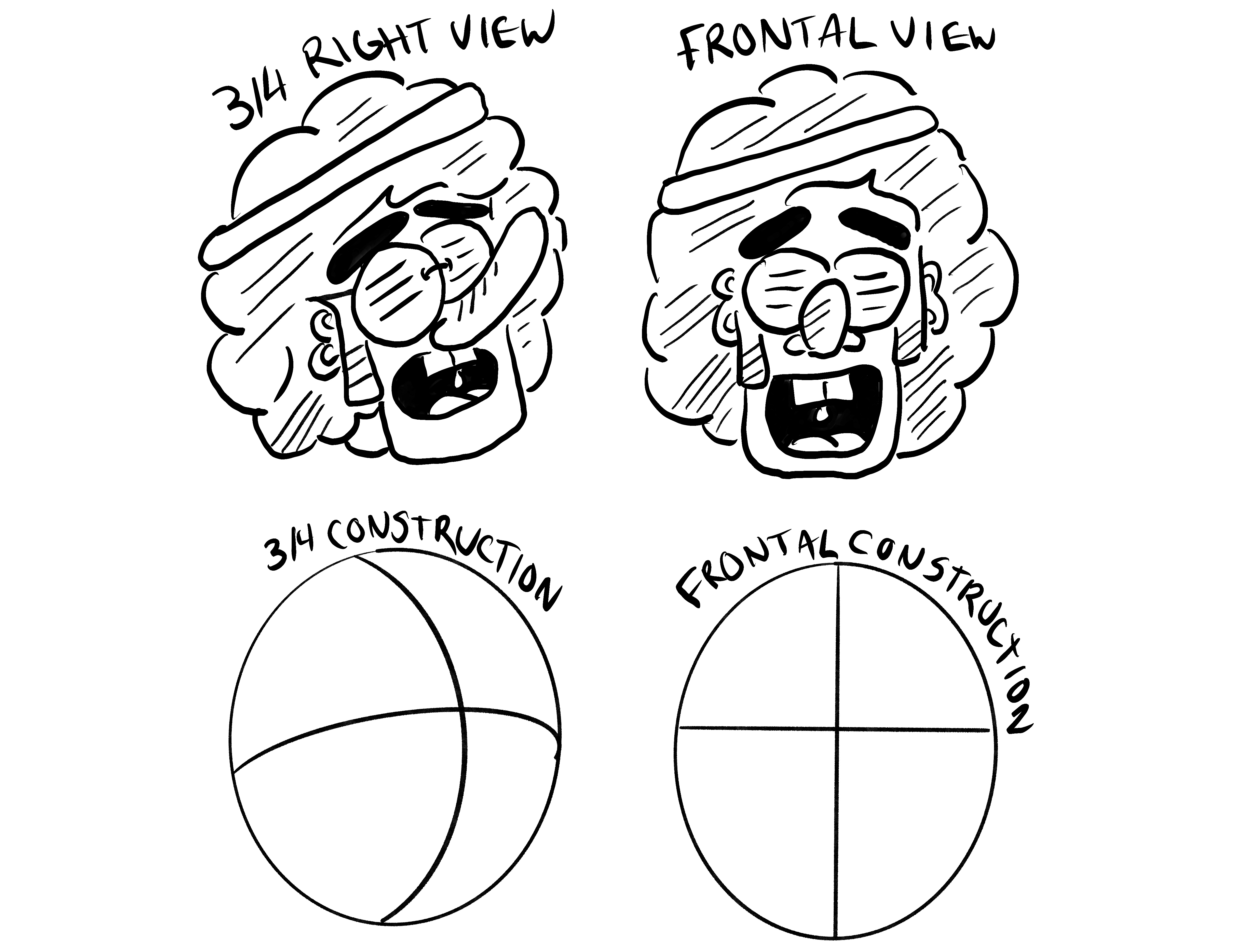
A frontal view often feels flatter and doesn’t show a character’s features as effectively, especially the nose. As you can see in the comparison above, the nose in the 3/4 view is much more defined than in the frontal view, giving the character a greater sense of depth and personality. Overall, the 3/4 view tends to look more dynamic.
If you want to improve your drawing skills, don’t limit yourself to frontal views. Practice drawing your characters in 3/4 view as well. The more you draw from different angles, the more comfortable you’ll become, opening up many more possibilities for poses, expressions, and compositions. Your cartoons will also feel less flat and much more engaging.
Posted - 06/21/2026
Just Go With It
In surfing, there’s a saying: “The ocean always wins.” I think the same idea applies to cartooning. As an artist, you need to discover your strengths and weaknesses and work with them rather than constantly fighting against them.
I know I’m good at:
- Character design
- Storytelling
- Vector illustration
- Colour selection
- Photorealism
- Using markers
- Caricature drawing
- Figure drawing
If you’re smart, you lean into your strengths and develop them even further. If you spend all your energy fighting against your natural abilities, you’re likely to become frustrated. Just like in surfing, if you fight the ocean, you’ll probably lose.
That doesn’t mean you should ignore your weaknesses. There is often something valuable to learn from them. Studying figure drawing, for example, can teach anatomy, gesture, and proportion, even if you’re primarily a cartoonist. Those lessons can still improve your work.
The problem comes when you naturally draw like a cartoonist but desperately want to become a photorealistic illustrator. You can work incredibly hard at it, and you may improve a great deal, but it may never feel natural.
I’ll give you an example.
I’ve been playing guitar for over twenty years. I practise regularly, but I know I’ll probably never be a great guitarist. I’m competent, but music isn’t how my brain naturally works. I think in images and words.
Some of my music teachers seem to think in sound as if it were a colour, and has texture. Music comes naturally to them in a way it never has for me. That doesn’t discourage me from playing, I enjoy it, but I’ve accepted that it isn’t my greatest strength.
Cartooning is different. That’s where my mind feels at home.
So here’s my advice: if you’re naturally good at cartooning, embrace it. If photorealistic drawing is your strength, pursue that instead. Keep improving your strengths. Learn from your weaknesses, but don’t become obsessed with turning every weakness into a strength.
You are not defined by what you do poorly.
The ocean will always win. Learn to work with it, not against it.
Posted - 06/21/2026
How Many Cartoons Have I Drawn?
Hard question to answer accurately, but... a lot!
I've been cartooning for around 10 years, and I'd estimate I've created well over 1,000 cartoons. I have sketchbook after sketchbook sitting in storage.
That actually brings me to an important tip: don't throw out your old sketchbooks. I find it useful to look back through mine, even if they don't reflect my current skill level. They often spark new ideas, and it's fun to see how much you've progressed.
Maybe make it a tradition. At the end of every year, pull out your old sketchbooks and flip through them. You never know, you might rediscover a hidden gem.
Posted - 06/21/2026
Expensive Markers: A Ripoff?
When I bought my first set of "professional" alcohol markers, I couldn't wait to try them. Unfortunately, I came away disappointed. I won't name the brand, it rhymes with "Topic”, but I'm not saying they're bad markers. They simply didn't live up to the hype for me.
Now, I don't do a lot of colouring by hand (see Hybrid Approach – Hand Meets Digital). I mainly use markers to test colour combinations rather than create fully rendered illustrations. For that purpose, I didn't notice any meaningful advantage over much cheaper alcohol markers. Many people say premium markers blend better, but in my own testing, I wasn't able to achieve significantly better results.
Another commonly mentioned benefit is long-term colour stability. To be fair, I haven't noticed any fading with the expensive markers, but I also haven't experienced fading with the cheaper brands I've used.
If you want to invest in premium markers, I'm certainly not going to tell you not to. They're good products. They offer a wide variety of colours, replaceable nibs, and refillable ink. I just don't think they're worth the significantly higher price for the way I use them.
If you're selling your coloured hand-drawn artwork, investing in a premium alcohol marker may make sense. The wider colour selection, refillable design, and consistent performance can be worthwhile for artists who use markers extensively. For my workflow, however, I simply don't see enough of a benefit to justify the extra cost.
Posted - 06/21/2026
The DIY Drafting Table
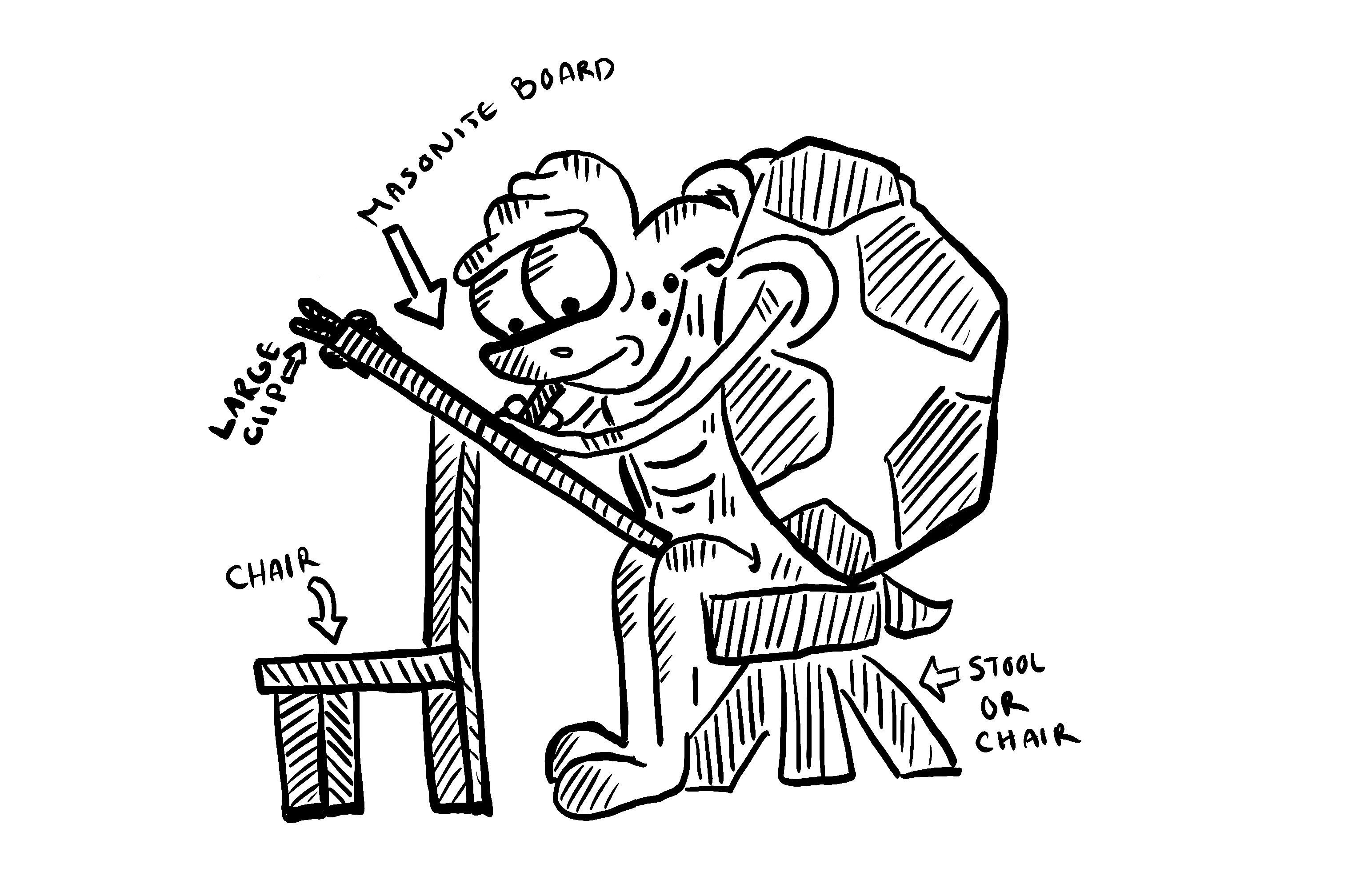
So, what do you need? A large clip (about $2) and a Masonite board (18 × 24 inches, about $4).
Now you might be wondering, “How do I turn a large clip and a Masonite board into a drafting table?”
It’s easy. Sit in a chair beside a raised surface, such as a table or another chair. Rest one end of the Masonite board on your lap and the other on the edge of a table or the top of another chair, making sure it’s higher than your lap. This creates an inclined drawing surface that’s surprisingly comfortable to work on. If you’re using an adjustable chair, you can lower the seat to create a steeper angle.
The large clip is simply used to hold your paper in place, especially if you’re drawing on loose sheets (see A Tip on Paper).
And that’s it! For around $6, you’ve got a portable drafting table that you can use almost anywhere.
Posted - 06/20/2026
Printing: The Achilles' Heel
So you've gone digital. That's great, but be aware there is one big drawback: printing.
The thing with digital artwork is that what you see on your screen is not always what you'll get on paper.
First, you need to understand the two main colour modes: RGB and CMYK.
RGB stands for Red, Green, and Blue. It is the colour mode used by digital displays such as computer monitors, phones, tablets, and televisions. As you read this page, the colours you see are being created by tiny red, green, and blue pixels.
Printing, however, uses a different colour mode: CMYK, which stands for Cyan, Magenta, Yellow, and Key (Black). Printers reproduce colours by combining these four inks.
When creating artwork that will only be viewed on a screen, you should work in RGB. RGB has a wider colour range than CMYK, allowing for brighter and more vibrant colours. If you create screen graphics in CMYK, they may appear duller because that colour space is designed to match the limitations of printing.
So how do you choose between RGB and CMYK? Most drawing and photo-editing programs will ask you which colour mode you want when creating a new document or exporting. As a general rule:
- RGB for screens.
- CMYK for printing.
Even if you work in CMYK, your print may still not match what you see on your screen. Every printer reproduces colours slightly differently, and most computer monitors are not colour-calibrated to match a specific printer.
So what can you do?
You can calibrate your monitor and use printer colour profiles, but I'll admit this isn't my area of expertise. Personally, I've had very good results with my Epson EcoTank ET-8550 Photo Printer, but that doesn't mean you'll get identical results. Every computer, monitor, printer, paper, and ink combination behaves a little differently.
Another option is to use a professional printing company. Professional print shops typically produce more accurate and consistent colour than home printers, although they cost more and usually require a longer turnaround time.
In my opinion, printing is one of the biggest frustrations of working digitally. It takes experimentation to discover the settings and workflow that produce the results you're after.
That said, digital artwork has one enormous advantage: once you've finished a piece, you can make as many identical copies as you like.
Posted - 06/20/2026
Sex, Drugs & Cartooning
So, you want to get into cartooning because you want to be part of “the scene”? I urge you to think again. I know this fantasy of a sex- and drug-filled lifestyle exists, perhaps because of Andy Warhol and the culture of the 1960s, but cartooning has never been that to me.
I don’t do drugs and rarely drink, and guess what? I like it that way! In fact, I can’t recall ever creating art while intoxicated. I’m aware that some artists have turned to drugs for inspiration or enjoyment, but you don’t need them. Personally, I’m already filled with ideas, and I find they snowball once I start drawing (see Mind Of Its Own).
If you don’t have any ideas (which I doubt), maybe cartooning isn’t for you. Or maybe another form of art, such as abstract painting, would suit you better, since it relies more on feeling and expression. But I’m just throwing darts at the wall. I have yet to meet someone with no imagination.
I’m pretty confident you won’t magically become an artistic genius just because you smoke a marajuana cigerette. You might draw a little differently, but it won’t give you superpowers. Personally, I couldn’t imagine relying on substances to create art. It just doesn’t seem very appealing.
So don’t get caught up in the whole “sex, drugs, and cartooning” idea. Instead, think of cartooning as a discipline. You’re not going to get better by expanding your mind with substances. You’ll get better by simply drawing. There are no magic pills for cartooning, just practice.
Posted - 06/20/2026
A Tip on Paper
If you plan on creating hand-drawn cartoons, you’ll most likely be drawing on paper. So, what paper do you need?
When I’m freeform sketching or just playing around, I like to use standard copy paper (11 × 17 inches). I use it because it’s cost-effective (roughly 6 cents per sheet), takes ink surprisingly well, is widely available (I buy mine at Staples), and transfers easily on an LED light pad.
As far as size goes, I find 11 × 17 inches to be the perfect fit. It’s not too small, it’s not too big, it’s just right. I also like it because I do my final drawings on Canson Fanboy Comic Book Art Boards, which are the same size. That means I don’t have to rescale my drawings when transferring them with the LED light pad.
The only downside to standard copy paper is that it’s loose, so you’ll benefit from using a clip and a Masonite drawing board. I also recommend placing a few extra sheets of paper underneath your drawing as padding. I find I draw more freely with a little cushioning underneath, and it simply feels more comfortable.
If you’re travelling and need bound paper, there are plenty of options. I usually use mixed-media sketchbooks because I like experimenting with different colour mediums, and they’re generally cost-effective.
Most papers are labelled with their intended purpose, and I suggest following those recommendations. That said, you’re an artist, and nothing is set in stone. Don’t be afraid to experiment.
Just in case you wanted to use the same paper I do, here are my favourites:
- Staples FSC-Certified Copy Paper – 11 × 17 inches
Approximately $30 for 500 sheets (about 6 cents per sheet) - Fanboy Comic Book Art Boards – 11 × 17 inches
Approximately $33 for 24 sheets (about $1.38 per sheet)
I don’t have a particular recommendation for bound paper because I rarely use it but if you stick with well-known brands such as Canson or Strathmore, you’ll likely be happy with the results.
Posted - 06/20/2026
No More Blue: Non-Photo Blue
I have been using non-photo blue pencils for years, but I have finally had enough of them. I do like how they look as an underdrawing and still find them useful, but there are two reasons I’ve thrown in the towel.
First, they are difficult to erase. Yes, I’ve tried different brands, but they all seem to have the same problem. It’s frustrating to ink a drawing only to find that the blue lines refuse to erase completely.
The second issue is that they tend to be waxy. This can make inking frustrating because the ink doesn’t always adhere well to the paper and may skip or bead up over the pencil marks.
So what do I use instead? A Pentel P207 mechanical pencil with HB lead. It makes an excellent underdrawing because the lines erase cleanly after inking. The only downside is that HB graphite can smudge a little before it’s inked.
I suppose nothing is perfect, but for me, the Pentel P207 gives better results, and I have no plans to go back to non-photo blue.
Posted - 06/20/2026
Why Do I Like Pigma Micron Pens?
Simply put, I think they are the gold standard for fineliners.
Over the years I’ve tried many fineliners, and I’ve had plenty of disappointments. I always come back to Pigma Microns because, in my experience, they have some of the best ink available. They dry quickly, are archival, and tend not to bleed when used with alcohol markers.
Another advantage is the wide range of tip sizes available, allowing you to create everything from bold outlines to incredibly fine details. Just be gentle with the very fine nibs (03 and smaller), as they can be damaged if you press too hard.
They’re also widely available and reasonably priced, making them an easy recommendation for beginners and experienced artists alike.
So if you want my advice, buy Pigma Microns. I think they’re the best. Of course, if you want to experiment, there are plenty of other brands to try. But after years of testing different pens, I always find myself coming back to Microns.
I say save your money and go straight to Pigma Microns. I think you’ll like them as much as I do.
And just to be clear, I’m in no way affiliated with the brand. I’m simply recommending them because they’ve consistently given me the best results.
Posted - 06/19/2026
Draw Like A Child
In meditation, you’re taught to empty your mind. In cartooning, you’re taught to fill it.
As a cartoonist, you want thoughts. You want ideas. You want as much creative noise as possible. No wonder people joke that artists are a little crazy.
So what do you do if you don’t have any ideas?
Maybe take up another hobby.
I’m kidding.
As I’ve said again and again, find inspiration. Find what excites you. Fill your mind with the things you love, happy thoughts.
Now here’s where cartooning becomes a little like meditation.
First, you fill your mind with ideas. Then you empty them onto the paper.
Draw like a child. Don’t worry about rules. Don’t worry about perfection. Let the ideas pour out. Capture the feeling, the direction, the energy, and the flow.
This is what I call Freeform Sketching.
This is how most of my illustrations begin. An idea starts making noise in my head. It grows louder and louder until “bam” I have to get it onto paper.
So let yourself be playful.
Draw like a child.
Let go.
Create.
Posted - 06/19/2026
Rule of Thirds: An off Center Approach
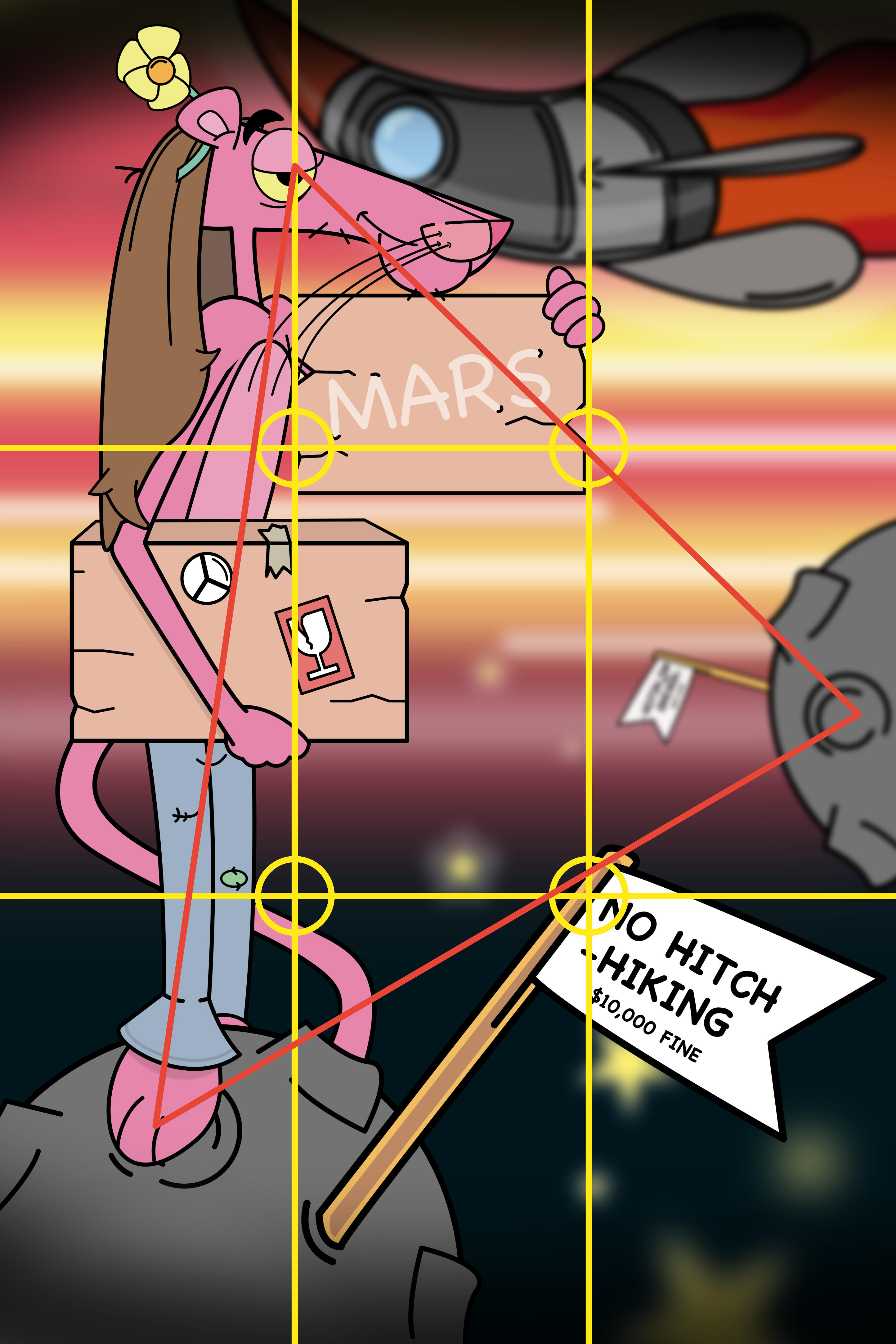
To use it, imagine dividing your composition into a 3×3 grid using two equally spaced horizontal lines and two equally spaced vertical lines (above: yellow lines). The guideline suggests placing your main subject along one of the vertical or horizontal lines, or even better, at one of the four points where those lines intersect.
In my example above, you can see that the Pink Panther is positioned on the left vertical line. His eye falls directly on that line, helping to create a balanced and visually interesting composition.
You'll also notice that several other objects are positioned near the four intersection points, such as the signs. This strengthens the composition and also draws attention to the triangulation (above: red lines) created between the main elements (see Triangulation).
The idea behind both the Rule of Thirds and triangulation is to create visual interest and guide the viewer's eye through the illustration. Centre-aligned compositions are sometimes considered less dynamic or even boring. However, that isn't always the case, there are many situations where a centred composition is the strongest choice. I'll cover that topic in another post.
Posted - 06/19/2026
What Do I Like?
When it comes to cartoons, I love comic book cover art (see Inspiration), especially the covers published by Gold Key Comics. The characters have so much personality. They are often comical, beautifully coloured, simple in design, and full of charm. The list could go on. Whenever I look at them, they simply make me smile.
To be honest, I’m not much of a comic book reader. I get my kicks from cover art, single-panel cartoons, and four-panel comic strips. I enjoy a quick read that gets straight to the point.
As an artist, I think it’s important to discover the kind of cartoons that truly inspire you. It would be a little strange to get into cartooning if you didn’t enjoy cartoons at all. That said, I suppose it’s possible to create out of frustration with what’s already out there.
Whatever the reason, I encourage you to find cartoons that genuinely excite you, artists, characters, or styles that make you want to pick up a pencil. Having something to admire and learn from can be one of the greatest sources of inspiration as you develop your own voice.
Posted - 06/18/2026
A Note on Plagiarism
Copying an image so closely that it is nearly identical to the original is something I don't agree with, unless you're doing it as a private study to improve your skills. Learning by copying is a long-standing practice, but those studies should remain just that, studies.
A much better approach is to use other artwork as inspiration. Take an idea, composition, or mood and make it your own. Change the characters, colours, setting, perspective, atmosphere, or story until the finished piece reflects your own creativity rather than someone else's work.
Below is an example of an illustration that inspired one of my cartoons. As you can see, I occasionally create mash-ups using well-known cartoon characters, but those pieces are simply for fun and are not the focus of my work. In reality, I much prefer creating my own original characters and ideas.
I also draw inspiration from many classic comic book covers, especially those published by Gold Key Comics. I love their artwork and storytelling, but I always make a conscious effort to create something new rather than copy the original.
In Canada, parody can be protected under copyright law in certain situations. However, copyright can be complex, and I'm not a lawyer. If you're creating artwork inspired by someone else's work, it's always wise to make it clearly your own and avoid producing something that could be mistaken for the original.
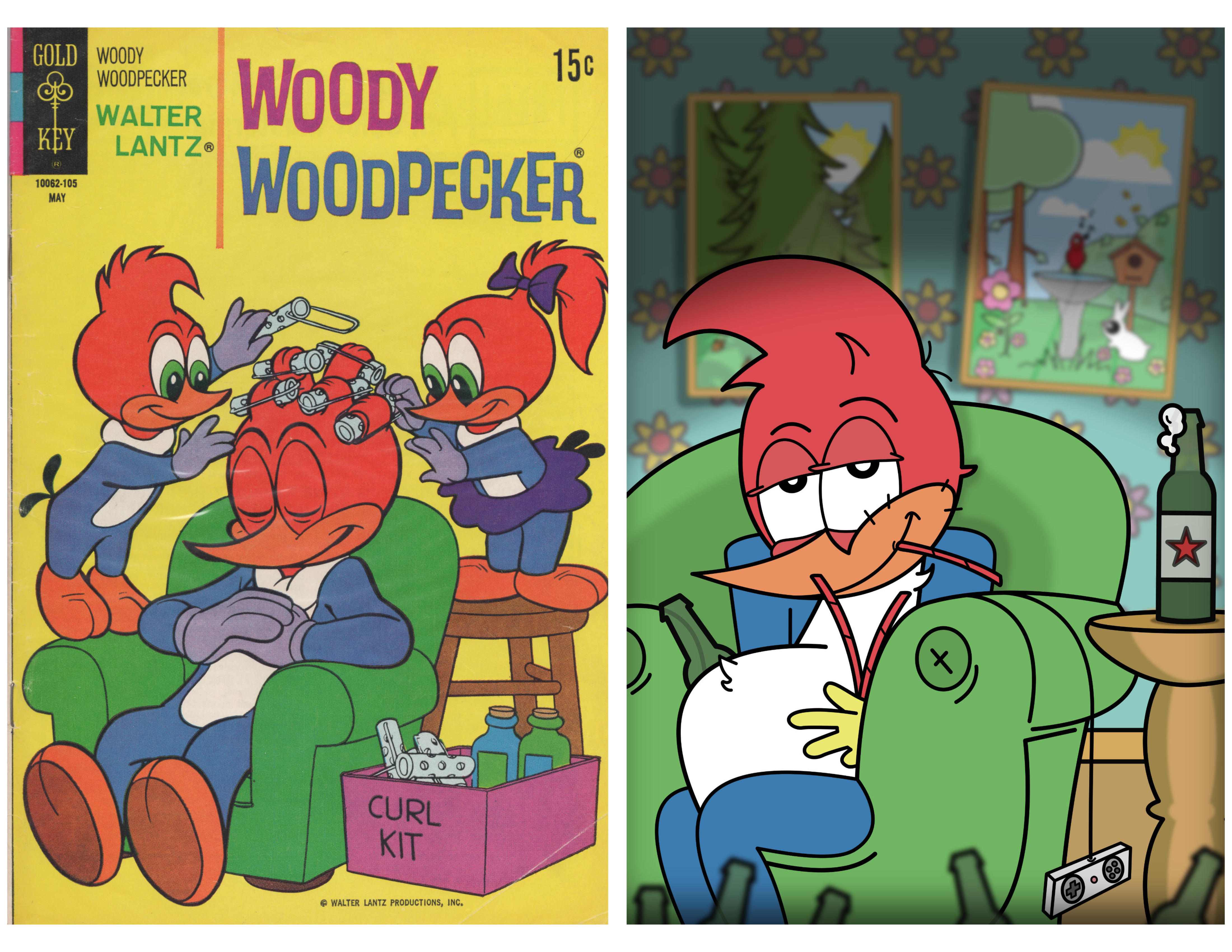
Above right: Re-imagined image.
Posted - 06/18/2026
Being a Salesman vs. an Artist
Again, this is something I cannot stress enough: don’t get into cartooning because you think you’ll get rich. Cartooning is about passion, creativity, and love for the craft.
But can you get rich from cartooning?
Well, I guess anything is possible. However, as much as you need to develop your artistic skills, you’ll also need to become a skilled salesperson.
If you want to sell your work, you need to offer something unique. Your style has to stand out from the crowd.
That’s easier said than done. There are already countless cartoon styles and influences out there, and finding your own voice takes time.
Then there’s the question of exposure.
How are you going to promote your work? A website? Social media? Art shows? Conventions?
The truth is, none of these are easy. If you enjoy meeting people, local art shows and conventions can be a great grassroots way to build an audience.
The internet is just as challenging. Simply building a website doesn’t mean visitors will magically appear. You have to promote it, keep it updated, and give people a reason to come back.
Selling your art is a full-time job in itself. Don’t expect to post one picture online and suddenly become famous. It can happen, but it’s about as likely as winning the lottery.
Another challenge for artists today is AI.
Now, I don’t necessarily think AI is bad for artists (see A Friend of the Devil: AI). But I do think it has made it harder for artists who want to earn a living selling commercial artwork. Anyone can now generate T-shirt designs, cartoon characters, logos, and illustrations in seconds.
But if you’re cartooning because you genuinely love to draw… who cares?
I enjoy the process just as much as the finished piece. AI can certainly create impressive images, but it can’t replace the satisfaction of making something with your own hands.
It’s a bit like cooking. You can go to a restaurant and enjoy an incredible meal, but if you love cooking, you’re still going to head into the kitchen and make your own. The joy isn’t just in eating, it’s in creating.
So, if you’re getting into cartooning purely for the money, I wish you luck.
But if you’re doing it because you love it, simply enjoy the journey and see where it takes you.
Posted - 06/18/2026
Is Everyone an Artist?
Sure. But not everyone is a good communicator.
As I mentioned in an earlier post (see What To Draw?), cartooning is all about telling a story. Even if you’re incredibly creative, that doesn’t necessarily mean people will understand your message. For example, if I wanted to create a message of hope but used dark colours and demonic imagery, most people probably wouldn’t interpret it as happy or uplifting.
The best way to find out whether people understand your artwork is to show it to them and ask for their opinion. I know it can be difficult when their interpretation differs from your own, but you’ll have to get used to it. I’ve been a student my whole life, and one of the biggest lessons I’ve learned is that criticism is one of the best tools for growth. If you take every comment personally, you’ll limit your progress as an artist.
So, back to the original question: Is everyone an artist?
I believe the answer is yes.
Everyone has their own unique way of seeing the world, and that perspective is worth sharing. But is everyone a good artist? Not automatically. Like any form of communication, creating meaningful art takes practice. You have to develop your skills, learn how to express your ideas clearly, and understand how your audience interprets your work.
As I’ll say again and again: Don’t copy, create.
I understand that you love Spider-Man, but don’t simply redraw him exactly as he appears in the comics. Change the costume, the setting, the story, or the message. Make it your own.
The best advice I can give any artist is to strive for originality. Realistically, almost every idea has been explored before, but no one will express that idea in exactly the same way you will. Your perspective is what makes your artwork unique.
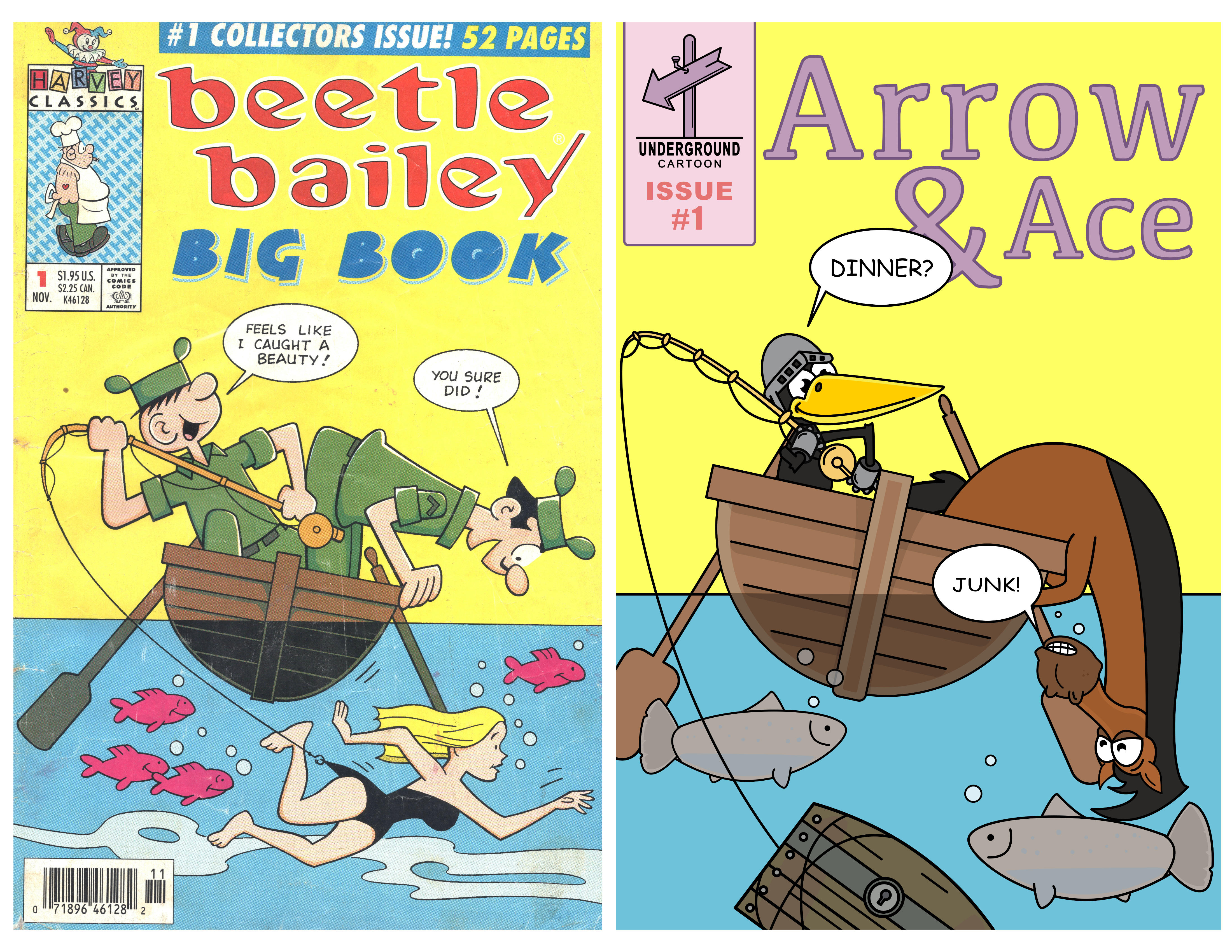
Above right: Re-imagined image.
Posted - 06/17/2026
Finding Your Style
A lot of people are unsure what type of artist they are. Luckily, I never really had that problem. From the start of art and design school, my strongest skill seemed to be vector illustration. Later, I began drawing cartoons by hand, although I still wouldn't say it's my greatest strength. So how did I discover that cartooning was my style? It's actually kind of an interesting story.
During my Drawing 2 class at George Brown School of Design, I used to get bored and doodle cartoons during lectures. One day, the student sitting next to me complimented one of my drawings, and something clicked. I remember thinking, Maybe this is my style.
I was never interested in highly detailed, photorealistic illustrations or abstract art. Cartooning simply felt right. From that moment on, I decided that this was the style I wanted to pursue.
There are many different styles of cartooning, but over time I've come to understand my own. Digitally, my work is colourful, playful, creative, character-driven, and simple. My hand-drawn work, on the other hand, is mostly black and white with a focus on linear rendering. That may just be a phase I'm going through, but I rarely colour my traditional drawings because I find using markers frustrating.
Digitally colouring an illustration is much easier for me, and I usually like the results a lot more.
Not everyone will have the same "aha!" moment that I did, but pay attention to the type of art you naturally gravitate toward. If you love drawing realistic portraits or still-life objects, maybe that's your strength. If you enjoy creating simple, expressive cartoons, perhaps that's where you belong.
One thing I don't encourage is becoming known only for copying other artists, unless that's genuinely what you want to do. It's perfectly fine to study other artists and learn techniques from them, but try not to make copying your main focus. Your goal should be to develop your own voice. After all, copies are rarely remembered the way original work is.
Another great way to discover your style is to ask for feedback. Show your artwork to other people and pay attention to which pieces they respond to most. Sometimes others see strengths in your work before you do. Most importantly, ask yourself whether you actually enjoy drawing that way. You don't have to limit yourself to a single genre, but trying to master every style at once can quickly become overwhelming.
As you can see, I can't tell you what your artistic style is. All I can do is encourage you to be patient, experiment, and seek feedback. Sadly, many artists get frustrated and give up but if you love it, keep going.
Who knows? Maybe one day you'll be sketching in a coffee shop, someone will stop to compliment your work, and you'll have your own "This is it!" moment.
Good luck, and enjoy the journey.
Posted - 06/17/2026
India Ink – Love/Hate
I really wish I could say that I love drawing with India ink, but unfortunately, that’s not the case.
Let’s start with what I do like. Using a dip pen and nib is fun, it creates beautiful line variation, and there’s something satisfying about working with the same tools that illustrators used decades ago. But despite all that, India ink falls short for me in several ways.
- It slows down the drawing process. The ink takes time to dry, so you have to work much more carefully. Something that might take two minutes with a fineliner can easily take ten with a dip pen.
- Marker compatibility can be frustrating. Even inks advertised as “waterproof” can sometimes bleed or smear when alcohol markers are applied over them. I haven’t yet found one that performs consistently enough for my workflow.
- Constant dipping. Dipping the nib into the ink is enjoyable at first, but over time it becomes tedious and interrupts the flow of drawing.
If you’re curious about dip pens, I wouldn’t discourage you from trying one. They’re relatively inexpensive and offer a unique drawing experience. Just be aware that they require a slower workflow and don’t always pair well with other traditional media, such as alcohol markers.
For me, dip pens are best suited to black-and-white linear renderings where expressive line work is the main focus.
They’re perfect for an evening of quiet drawing with a relaxing drink. In my case, that’s a good cup of coffee, I don’t drink wine.
Posted - 06/17/2026
Hybrid Approach – Hand Meets Digital
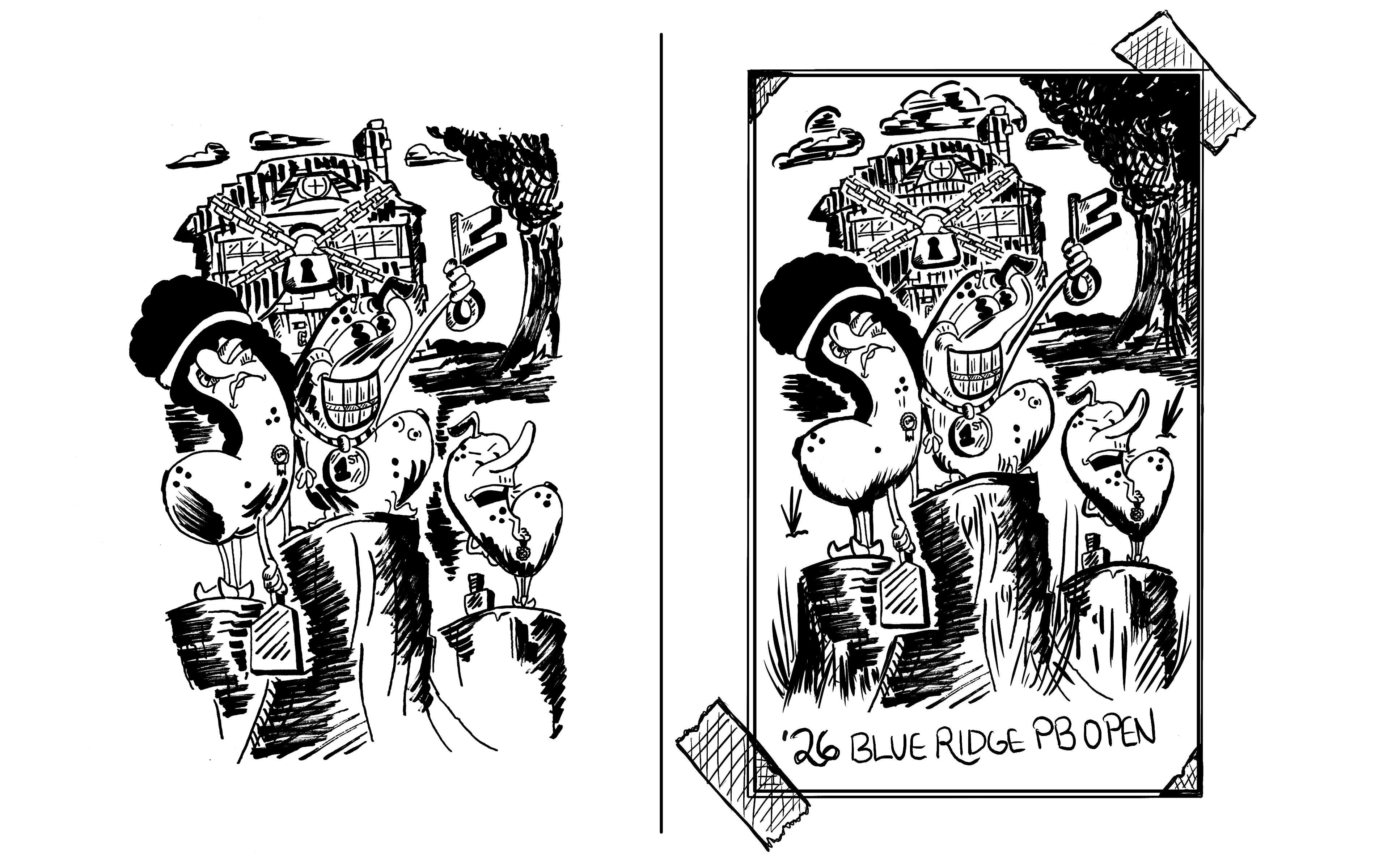
Above right: Digitized Final.
To bring my illustration into the computer, I use a flatbed scanner. I set the scanner to black and white so that no grey tones are captured. As I mentioned earlier, this process is intended for black-and-white line drawings. Rather than relying on shades of grey, this style uses techniques such as stippling, cross-hatching, and varied line work to create the illusion of light and shadow.
Once the illustration is scanned, I import it into a raster editing or drawing program. If you're using an iPad, I highly recommend Procreate. For desktop computers, I recommend Affinity Photo. Although newer versions are available, I still enjoy using the original paid version, it has proven to be a reliable tool over the years.
At this stage, I make final refinements such as cleaning up lines, adjusting line weight, adding captions, correcting mistakes, and occasionally adding extra line work to strengthen the illustration.
Combining traditional drawing techniques with digital editing has given me excellent results, and I highly recommend this hybrid approach if you have the resources. Like any skill, there is a learning curve, but with practice you'll become faster and more confident.
One of the biggest advantages of digitizing your artwork is that it becomes easy to reproduce. Not only will your illustrations look great on a screen, but you can also print high-quality copies to share with family and friends or even sell your work.
Posted - 06/17/2026
Where To Draw?
A lot of people underestimate how important the atmosphere you draw in can be. Finding the right place to create can have a huge impact on your creativity, focus, and enjoyment.
For me, that place is my basement studio. It’s quiet, comfortable, and relaxing. I can sit back, put on some music, pour a cup of coffee, and before I know it, I’m in creative heaven.
When choosing a place to draw, consider:
- Size
- Privacy
- Climate control
- Noise level
- Lighting
Here are a few ways to make your workspace more inviting:
- Use scents that help you relax.
- Hang artwork or other things that inspire you.
- Keep the room at a comfortable temperature.
- Play music that helps you focus.
- Enjoy a cup of coffee, tea, or your favourite drink.
Posted - 06/15/2026
What To Draw?
Simply put: draw almost anything you want.
When it comes to cartooning, you can draw:
- Cats
- Dogs
- People
- Aliens
- Monsters
- Knights
- Flowers
- …and just about anything else you can imagine.
Cartoonists are storytellers. You have to ask yourself: How do I want to impact my viewer? A good cartoonist makes their message clear and easy to understand.
Personally, I enjoy creating illustrations that are silly and playful. I want people to see my work as funny, creative, and lighthearted.
Ask yourself: How do I want to be seen?
Once you answer that question, you’ll have a much better idea of what kind of cartoons you want to create.
Posted - 06/15/2026
Drawing For Fun
Why draw?
I might as well be straight with you: if you’re drawing because you want to become rich and famous, you may want to rethink things. Art is not a get-rich-quick scheme. It’s something you do out of love.
Now, I’m not saying you can’t earn money from your artwork or help fund your passion by selling it. But I wouldn’t quit your day job just yet.
To me, cartooning is all about the process. You start with a simple idea and watch it grow. It’s amazing how a drawing evolves as you work on it. The finished piece is just the icing on the cake.
So if you’re thinking about cartooning purely to make money, don’t do it.
Do it because you love it.
Do it to make people laugh.
Do it to spread a little joy in the world.
Posted - 06/14/2026
LED Light Pad - I Have Seen The Light
One tool I have only recently been introduced to is the LED light pad. Honestly, I don’t know how I survived Art & Graphic Design School without one. It is an incredibly useful tool for refining drawings layer by layer, and I highly recommend adding one to your workspace. As a bonus, they are relatively inexpensive.
The great thing about an LED light pad is that it allows you to make accurate reproductions of your drawings with ease. It is also perfect for creating underdrawings, letting you make adjustments and refinements at each stage of the process.
One suggestion when purchasing a light pad is to choose an A3-sized model. It is always better to have a larger working surface, as it gives you more flexibility with different paper sizes and projects.
As a precaution, be careful with markers and inks when drawing on top of a light pad, you don’t want them to bleed through your paper and stain the surface of the pad. When inking, you may want to place a spare sheet of paper between your drawing and the light pad, just to be extra safe.
Posted - 05/30/2026
The Pencil
The first tool I turn to when starting a drawing is the pencil. As a cartoonist, it is important to become comfortable with this tool.
But are all pencils created equal? Which ones are best for cartooning?
Over the years, I’ve experimented with many pencils and have discovered two favourites: the Staedtler Triangular HB Pencil and the Pentel P207 0.7 mm Mechanical Pencil HB.
Staedtler Triangular HB Pencil
The Staedtler has a great feel. It glides easily across the paper, and when I use it, I tend to draw very loosely. Being an HB pencil, the lead isn’t overly dark and provides consistent lines and shading. Another perk is comfort. The triangular shape sits nicely in the hand, and the pencil has a satisfying weight to it. Best of all, it’s extremely affordable.
Pentel P207 Mechanical Pencil HB
The Pentel P207 is another excellent choice. Since it’s a mechanical pencil, there’s no need for sharpening. Its greatest advantage is that the marks erase very easily, making it ideal for rough sketches and underdrawings.
My only complaint is that it feels a little light in the hand, and you have to be careful not to smudge your work. That said, I really enjoy drawing with it. Like the Staedtler, it encourages me to draw freely and focus on getting ideas onto the page.
Final Thoughts
I think it’s important for artists to experiment with different pencils. They’re inexpensive, and the pencil you choose can have a surprising effect on the way you draw. For cartooning, I generally recommend sticking with an HB pencil.
I prefer simple, everyday pencils over specialized drawing pencils. I like having an eraser, I don’t do much rendering or heavy shading, and I appreciate tools that are affordable and easy to replace. If you’re just getting started, try the two pencils mentioned here. Hopefully, you’ll enjoy them as much as I do.
Posted - 05/28/2026
Getting Started With Cartooning
What you need.
A desk, a pencil, some paper.
What you actually need (Sketching & Inking):
- Pencils (Staedtler Triangular HB Pencil ~ $2 and/or Pentel P207 Mechanical Pencil HB ~$14)
- Fine-liners (Pigma Micron 05 ~$6)
- Brush Pens (Pigma FB ~$7)
- Eraser (Staedtler ~$2)
- Cork Backed Ruler (18” ~$12)
- Set Square ~$13
- Sketchbook (Mixed Media 11”x14” ~$30)
- Plain Paper 11”x17” ~$30
- Canson Fanboy 11”x17”Comic Paper ~$33
- Light Pad (A3 or larger) ~$50
- White Drawing Ink ~$10
- Desk Lamp ~$30
- Masonite Board 18”x24” (see The DIY Drafting Table) ~$4
- Large Clip ~$2
- Pencil Sharpener ~$2
These are materials I use all the time when cartooning. Buying and using these supplies will give you a great starting point for learning cartooning and black-and-white illustration.
This list focuses on sketching and inking tools. Colour supplies will be covered in another post.
Posted - 09/25/2025
Enough is Enough
Many artists, myself included, struggle with knowing when a piece is truly finished. It’s tempting to keep tweaking: a line could be straighter, a colour brighter, a shadow darker. But there comes a moment when you have to step back and simply say, it’s done.
So how do you know when that moment has arrived? That’s the hard part. Sometimes I’ll ask for another opinion, if someone tells me it looks great, I take that seriously. If you’re into AI, you can even ask it what it thinks. If the feedback feels right, maybe that’s your answer.
Often, I just sleep on it. Looking at the work the next morning with fresh eyes usually tells me everything I need to know.
In the end, there comes a point where “enough is enough.” The truth is, it’s completely up to you. Sometimes, you just know.
Posted - 09/16/2025
MIND OF ITS OWN
In art you’ll often hear someone say, “It hasn’t figured out what it wants to be yet.” But is that really true? Does art somehow take shape on its own?
Not exactly. What’s really happening is this: each new mark, detail, or idea changes the story your work is telling. The piece keeps evolving until you decide it’s finished.
Take a simple example: you draw a cactus in the desert. Straightforward enough. But then you get the idea to add eyes to the cactus. Suddenly, it’s no longer just a plant, it’s a character. Add a few more cacti with hats or glasses, and now you’ve got a whole cast in your desert scene.
That’s what artists mean when they say the art “takes on a life of its own.” It doesn’t magically form itself, you guide it, but the ideas snowball as the piece grows.
And the hardest part? Knowing when to stop. But that’s another post.
Posted - 09/15/2025
Triangulation.
A common technique I use in my illustrations is triangulation. Artists have relied on this compositional tool for centuries, and for good reason. It works.
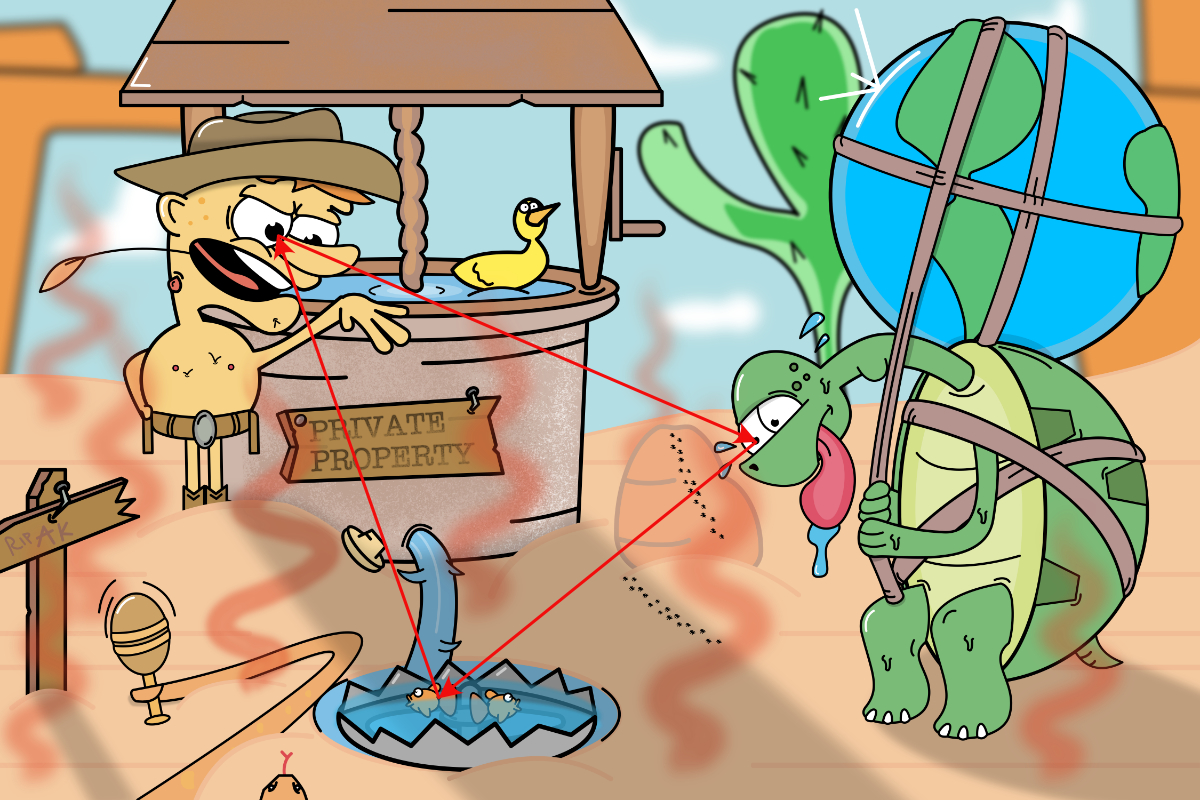
By arranging key subjects along a triangular path, triangulation naturally directs the viewer’s eyes, guiding them through the narrative of the piece.
In the illustration below, notice the red triangle. As you look at each subject (each point of the triangle), your eyes loop from one to the next, creating a natural movement that keeps you engaged with the scene.
That is the power of triangulation!
Posted - 09/10/2025
What was it like? Graphic Design School.
Was it intense? Absolutely. Was it rewarding? Without a doubt.
Before enrolling at The School of Design at George Brown College, I wasn’t an artist. I was lost, unsure what to do with my university and postgraduate education (see my [ABOUT] section).
Graphic design school changed everything. It forced me to dream. I wasn’t just creating advertising campaigns, brand books, writing copy, or making illustrations, I was transporting people. My projects became the medium through which I took my teachers, peers, and viewers to entirely new worlds. That’s what I loved most: I could channel my “wacky mind” into something meaningful, and it paid off with high grades and compliments.
Thinking About Going to Graphic Design School?
If you’re reading this because you’re considering art school or graphic design school, here’s my advice: absolutely consider it, but do your research.
As mentioned earlier, I attended The School of Design at George Brown College, one of the top-ranked graphic design schools in Canada. It was challenging but incredibly rewarding.
That said, be warned: you have to be prepared to work hard and open your mind. I remember my very first drawing project, we had to sketch 150 cubes in three hours. Every single one had to be drawn at a different angle and size. It was brutal at the time, but looking back, it was invaluable. That exercise taught me how to understand form, perspective, and lighting. To this day, I still sketch cubes when I’m bored.
Final Thoughts
If your dream is to become a graphic designer or just improve your design skills, schooling is worth considering. I’ve never worked as a full-time graphic designer for a company, but the skills I learned are priceless. Especially when considering how much it helped me with my cartooning and designing this site.
I can write.
I can draw.
I can dream.
And for that, I’ll always be grateful to George Brown College.
Posted - 09/08/2025
Photographic Memory
In the art world, having a photographic memory is often seen as a highly sought-after, almost “god-like” power. Many artists admire those who can perfectly recall details and recreate them with precision. But honestly? I’ve never wanted that ability. I’m a cartoonist, not a photo-realistic painter, and I’m perfectly happy with what I have.
For me, creativity is far more valuable than being able to reproduce superheroes or entire scenes without a reference. Sure, being able to do that might impress people, it’s a neat ‘party trick’ but developing your sense of colour, composition, humour, and storytelling will take you much further as an artist, in my opinion.
So don’t feel discouraged if you can’t remember the exact shade of red on Spider-Man’s suit. Instead, focus on harnessing your creative vision. Build your own compositions. By that, I mean your own characters, your own narratives, your own colour schemes, your own style. Play around with ideas in your head, everyone with an imagination can do that. You don’t need a photographic memory to create something original.
I’ll be talking more about using references in another post, but to sum it up: there’s nothing wrong with using references, just don’t copy them exactly, use them as studies.
Musicians listen to recordings of other artists to spark inspiration, they do covers, so why shouldn’t visual artists be allowed to do the same?
Just because you can’t remember every detail of what you see doesn’t make you any less of an artist. The greatest gift a cartoonist can have is an imagination. Everyone has one, you just have to learn how to use it. Don’t get caught up in what you can’t recall. Focus instead on what’s happening behind your eyes, and let that world come to life through your art.
Posted - 09/03/2025
Alex the Entertainer
I remember, for a project, a professor asked what art meant to each student and what we wanted to achieve with it. I wrote this:
”Art is the expression of one’s self; thus, I want to show the world who I am.”
Thinking back, I still believe that to be true. My art is about laughter, happiness, and joy. It’s about giving the viewer that feeling of their inner child, that warmth, that spark.
I am an artist, but most of all, I’m an entertainer.
I welcome you to watch my show, one heck of a wacky show, but one worth tuning into.
Posted - 08/31/2025
A Friend of The Devil: AI
I’m joking when I say AI is the devil, but I understand why so many artists are worried about it. You can describe a scene, and AI will render something in minutes. That’s powerful. But here’s the thing: it has limitations. AI can’t read your mind. It can’t perfectly recreate the vision you see in your head.
As an artist, my goal is not to make “generic” cartoons, but ones that reflect my inner vision. I want control over everything: the transparency of my highlights, the curve of my character’s lip, the weight of every line.
AI doesn’t give me that level of precision. Sure, it’s fantastic for people who don’t draw, who are on deadlines, or who need quick mockups. But for me, it doesn’t replace the need for artists, if anything, it highlights why artists are still essential.
How I Use AI as an Artist
I see AI as a critique tool, not a replacement for my craft. I’ll use it to review my work: What’s my art lacking? Does the AI “understand” my narrative? How would it rate my piece compared to others?
AI forces me to see my art from another perspective. The real question is: can you handle the feedback?
I can, and I think other artists should, too. Ignoring this tool could mean missing out on opportunities for growth.
For me, art is equal parts expression and effective communication. AI can help you improve as a communicator, but I don’t let it render my images or make my corrections. I want to stay in control every shape, every stroke, every highlight is mine.
AI isn’t my competition; it’s my mirror. It shows me where I can improve, but the final creative decisions will always come from me. The best advice I can give is use it for insights, not images, and you will grow as an artist. But let me warn you sometimes looking in the mirror is hard.
Posted - 08/30/2025
Where Did It All Go?
If you’ve never experienced creative block, I’d call you one of two things:a liar… or the luckiest person alive. So, what is creative block? Simply put: torture. You want to create. You need to express yourself. But you can’t. The ideas are gone, the well’s run dry, and you’re left staring at a blank page, a silent instrument, or an untouched canvas.
So what can you do about it?
Hahaha… that’s a funny question. In my experience, you don’t fight it, you embrace it. You step away. You redirect your energy into something else you love. For me, I bounce between two worlds: art and music. When the art well runs dry, I dive into music. When the songs fade, I crawl back to the sketchbook.
It’s a dance, a frustrating, beautiful dance I’ve learned to accept. I know there are endless exercises and “unlock your creativity” techniques out there, and sure, some can help. But most of the time? You just have to wait. And when the spark finally comes back, oh, you create, create, create.
A couple of tricks that help me along the way:
Switch mediums - If digital’s stale, I grab a pencil. If I’ve been deep in cartoons, I’ll explore figure drawing.
Fall in love - Not necessarily with a person, but with something: a passion, a sport, a pet, a new obsession.
For me, my love for music has inspired me more times than I can count. Maybe one day I’ll try romantic love… I can only imagine what kind of creativity that could unlock.
So here’s my advice: fall in love, explore, and let yourself breathe. The spark always comes back. And when it does, don’t hold back. Create like you’ve never created before.
Posted - 08/30/2025
Drawing by Hand
A lot of people believe that in order to draw digitally, you first have to master drawing by hand. Well… that’s not entirely true.
The perk of drawing by hand is that it’s a fast and flexible tool for getting your ideas out quickly. You can sketch character designs, experiment with layouts, test colour combinations, all at the flick of your wrist. Think of it like being a musician: being able to sing as well as play an instrument complements each other. Singing gives you an immediate, in-the-moment way to work out ideas. Drawing by hand works the same way.
Now, I know what you might be thinking: “I’m not good at it, so why bother?” But here’s the thing, it’s not about skill; it’s about capturing your ideas. You can always refine them later in the digital realm.
Honestly, I’m not a strong hand-drawer myself, but I still do it, and yes, you do get better with time. Plus, it’s fun! I love the tactile feel of pens, pencils, markers, and paper. There’s something grounding about it.
So before you jump straight to the computer, give hand drawing a try. You might surprise yourself with what you create.
Posted - 08/30/2025
Understanding Your Inner-World
When I close my eyes, I see nothing. Then I begin to think. Thoughts fill my head, especially images. These images and ideas form the foundation of my art.
I transport myself into other worlds. Through my art, I invite others into these spaces, revealing an unseen world that exists behind my eyes. And like I’ve said before, this is ONE WACKY WORLD, and my thoughts are a part of it.
The hardest part of creating is the fear that I won’t be able to capture the idea. Nothing scares me more than falling short of doing justice to the thought. Sometimes, the image escapes me but I’m like a clam that’s swallowed a grain of sand. I work and work until that tiny irritation becomes a pearl.
So yes, I rarely give up on a concept. Two steps forward, one step back that’s the rhythm of creativity. Eventually, every stubborn idea becomes something beautiful… a pearl worth sharing.